tl;dr – These are some thoughts about Colombian authors and why they are thinking about pluralism, and freeing the worlds from post colonialism.
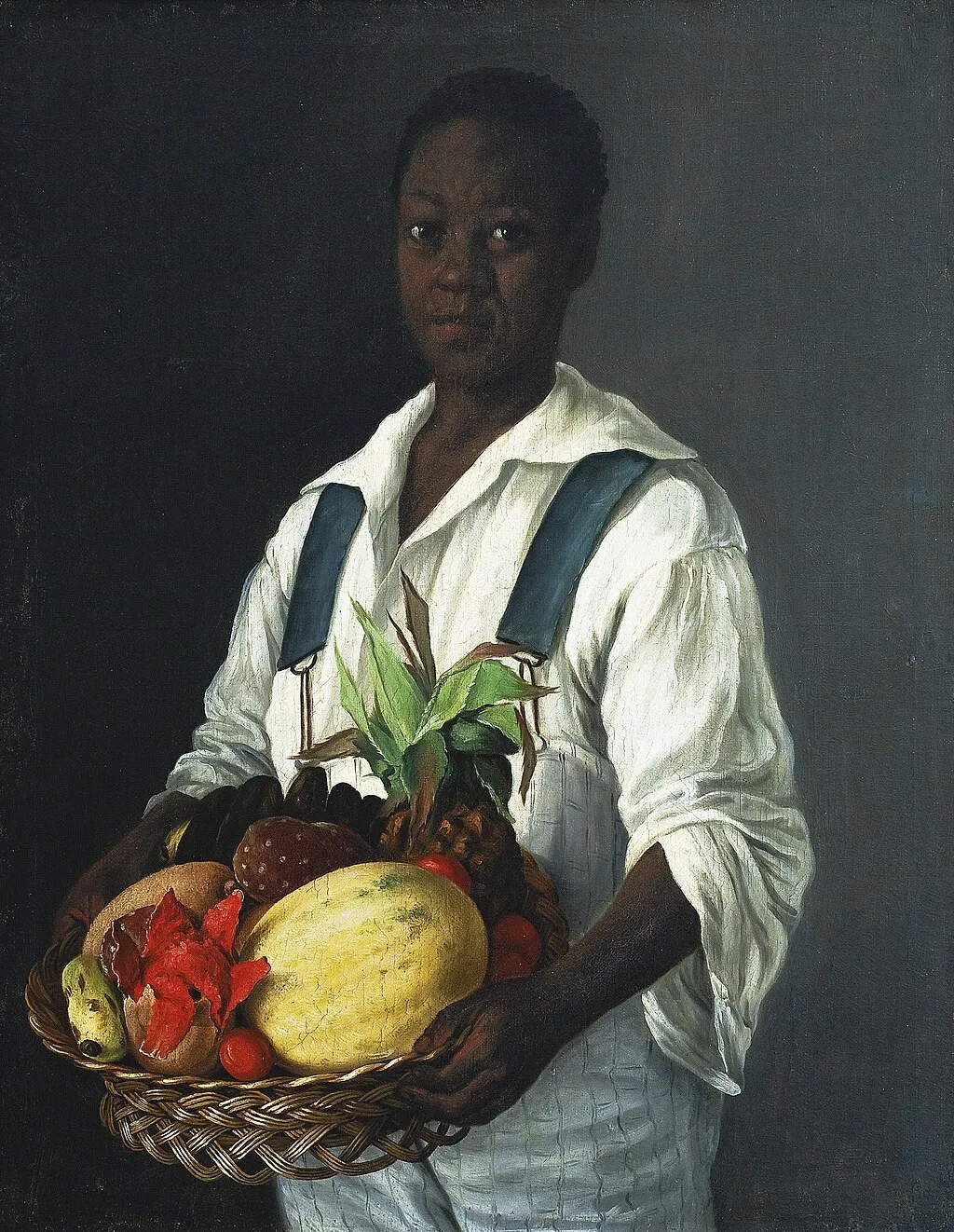
El Costeño by José Agustín Arrieta (1802-1879), Public domain, via Wikimedia Commons.

Yesterday, on November the 6th 2025, the during class, I said something in the realm of “You can’t understand people from the South.” I want to expand on this. It wasn’t meant as an attack on all of you. I am also European, even if I don’t look like that. I also can’t fully grasp what it means to be from “the South”. So it should have actually been “We can’t understand people from the South”. 1 I also think when reading, like Franca already urged us to, we have to take into account how the authors where socialized. Here is some context about Colombia, which in my opinion makes it easier to understand the desire of freeing the worlds of oppression and allow the existence of parallel realities as Alfredo Gutiérrez Borrero or Arturo Escobar suggest.
These things about Colombia I experienced myself or got told first hand from my father who was Colombian, born in 1942. He emigrated to Germany in the end of the 1960s and returned to Colombia in 2006 where he lived and thought Physics at the Universidad de Cartagena until 2016.
One thing is to understand is the diversity of cultures that make up Colombia. The Caribbean coast of Colombia for example has many areas where the descendants of slaves settled. This means we have the cultures of Berbers (Amazigh), Arabs, Egyptians, Nubians, Mandinka, Malinke, Bambara, Songhai, Fulani, Wolof, Serer, Akan, Ashanti, Fante, Dagomba, Ewe, Yoruba, Igbo, Hausa, Kanuri, Fon, Baoulé, Bété, Senufo, Bamileke, Duala, Bantu-speaking peoples. Together with the peoples who already inhabited these areas later known as Colombia and Venezuelas, Panama and Costa Rica, and the Yucatan. Mixed with the Spanish, the French, the British. All these cultures did not just disappear. They mixed and created something new. Due this “mescla”2 the Spanish spoken at the coast, “el costeño”, is very different from other dialects. People from other regions of Colombia told me they don’t understand it. This area is also one of the most bio diverse areas on earth. Everything moves, crawls, flies, swims, grows, decays all around you. Remember this is only the Caribbean coast. That is why I think I get that thought pluralism can easily grow in someone who is socialized in such an environment.
Then there is the oppression. In the colonial period through the Spanish from 1499 until ~1810 a huge part of the Quimbaya (Pacific coast), Chibchas (Andes) and Kalina (Atlantic coast) population was eradicated. From the 6 Million indigenous remained 600.000 in the Colombian population. In the recent history this country has been in a constant civil war from the mid 1960 until 2016. Many cruelties were happening from all the sides of this conflict. The communist opposition (FARC), the state, the paramilitary groups, and from the 70s on, also from the narcotic trafficking cartels. Due to the war and drugs that was proclaimed in the 70s, the United States of America also executed military actions in this sovereign country.
I got the feeling that there’s a big distrust within the population against each other. People living in gated communities if they can afford that or behind bars, if not.
This creates a very strong opposition against being oppressed, being seen as “the periphery”, being colonized, being the backyard of others.